Why Bristol's Wasps Are Already Ahead of Schedule This Year
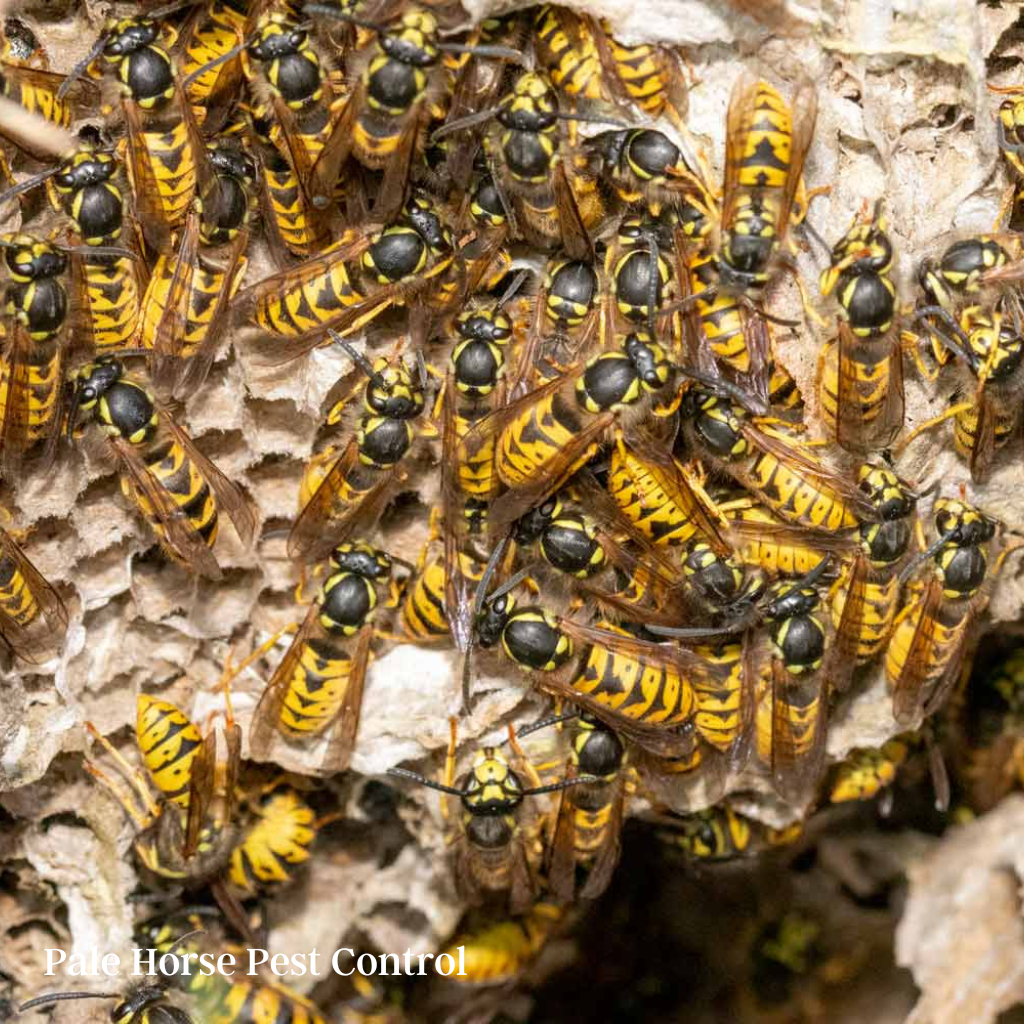
2026's mild winter means more queen wasps survived into spring. Here's what that means for Bristol homes heading into peak wasp season.
Quick Answer: Bristol is heading into an earlier-than-usual wasp season in 2026. A mild winter allowed significantly more queen wasps to survive into spring, meaning more nests are being established right now — and colonies will reach peak size sooner. If you're seeing wasps around your loft, shed, or roof line, don't wait. Early treatment is faster, cheaper, and far less stressful than dealing with a nest in August.
If you've noticed wasps earlier than you expected this summer — hovering around the eaves, ducking in and out of the garage roof, patrolling the fence — you're not imagining things. Bristol is tracking ahead of schedule in 2026, and the reason goes back to what happened (or rather, what didn't happen) last winter.
What a Mild Winter Means for Queen Wasps
Every wasp colony starts with a single fertilised queen. In autumn, she leaves her dying nest, mates, and finds somewhere sheltered to hibernate — a loft void, a gap behind fascia boards, a dry corner of a garden shed. She stays there, dormant, until temperatures rise in spring.
Here's the critical part: not all queens make it through. A hard winter kills a significant proportion of hibernating queens. A mild one doesn't.
The winter of 2025/26 was notably mild across the UK, including the South West. The winter of 2025/26 was relatively mild across most of the UK, and that matters because queen wasp survival is directly linked to winter temperatures — in a mild winter, more queens survive, which means more nests in spring, which means more wasps by summer.
The knock-on effect is straightforward. More surviving queens means more nest-building activity in spring. More nests built in spring means larger colonies by midsummer. And larger colonies by midsummer means an earlier and more intense peak wasp season for Bristol homeowners.
Pest managers across the country have reported higher-than-usual queen activity, which industry experts attribute directly to the unseasonably mild winter and spring — populations simply didn't decline over winter as they have in previous years.
There's a secondary factor too. Aphid activity — a key food source for queen wasps establishing new colonies — was noted earlier than usual, which is likely to have contributed to earlier wasp activity this year. Queens need to feed larvae to get the first generation of workers going. An early aphid emergence means an early start to colony growth.
What Local Pest Controllers Are Already Seeing
Current observations across the UK pest control sector suggest that 2026 could see higher-than-average wasp activity. That picture is consistent with what pest controllers are reporting on the ground: nests are turning up earlier, and in greater numbers, than a typical season.
For context, here's how a normal wasp season unfolds. A queen emerges in March or April, builds a golf-ball-sized nest, and raises her first batch of workers herself. Those workers take over in May and June, expanding the nest rapidly. By late August, a nest that held around 50 wasps in early summer can contain between 3,000 and 10,000 workers. That's why wasps seem to appear from nowhere in August — they don't. The nest has simply been scaling up all summer.
In a bumper year, that scaling-up process starts earlier and from a larger base. More queens, more nests, more workers entering the system sooner.
What this means practically for Bristol is that the window for early intervention — when nests are small, colonies are calm, and treatment is straightforward — is open right now. Pest controllers are already dealing with call-outs that in a normal year wouldn't arrive until July.
Industry experts are clear that the earlier infestations are identified and treated, the easier they will be to control. A nest treated in June is the size of a tennis ball. Left until August, the same nest will contain thousands of wasps and require a far more careful approach.
What It Means for Your Home This Summer
For Bristol homeowners, an early, bumper season has some practical implications.
Check your roof spaces and outbuildings now. Queen wasps favour loft voids, soffits, wall cavities, and undisturbed outbuildings as nest sites. If you haven't looked up there since last autumn, it's worth doing it now. A nest spotted in June is easy to deal with. The same nest in August is not.
Don't assume it's too early for a problem. Many householders wait until they see large numbers of wasps before calling anyone. By that point, the colony is mature and the nest may be well-established in a difficult location. If you're seeing wasps flying purposefully in and out of the same small point — an air brick, a gap under the eaves, a crack in the fascia — that's a nest entry, and it warrants a call.
Avoid DIY on active nests. This is always true, but it's worth repeating in a season where nests are likely to reach significant size earlier than usual. Do not try to seal the entry point while the nest is active — wasps will simply chew a new exit, sometimes directly into the living space below. Professional treatment using appropriate insecticide, applied correctly, is both safer and more effective.
Book early if you can. In a high-activity season, pest controllers' diaries fill up. The Bristol and Bath area will see high demand from July onwards. Getting ahead of that — dealing with a nest now rather than in peak season — means faster availability, less waiting, and usually a simpler job.
Keep an eye on gardens and outdoor spaces. Wasps build in the ground as well as in buildings — look out for a steady stream of wasps entering a hole in a lawn, bank, or soft ground, especially in sheltered spots near fences and hedges. Ground nests can grow very large and are easily disturbed by children and pets.
Wasp season is coming regardless. In 2026, it's coming a little earlier and with more momentum behind it. The good news is that this is also the best time to act — before the numbers build, before the nests are hard to access, and before the diary pressure of peak season arrives.
If you've spotted something that looks like wasp activity around your Bristol or Bath property, get in touch with Pale Horse Pest Control for fast, professional advice. We're BPCA-accredited, local, and already responding to early-season call-outs across the area.
Pale Horse Pest Control serves Bristol, Bath, and the surrounding area. For wasp nest removal and pest control advice, visit
palehorsepestcontrol.uk.