Why Do Wasps Chase You? The Real Reason (It's Not What You Think)
Why Do Wasps Chase You? The Real Reason (It's Not What You Think)
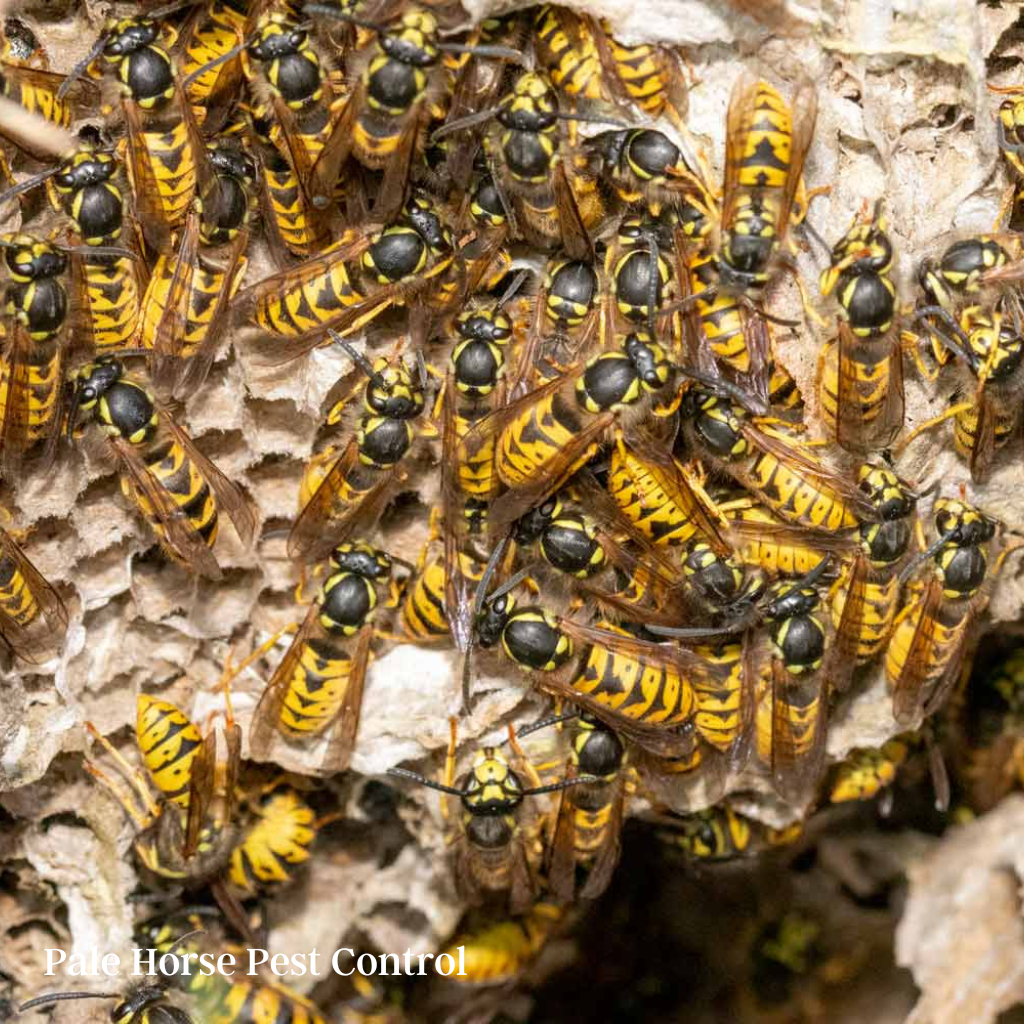
Why do wasps chase you specifically? We explain the real defensive behaviour, how far they'll actually follow, and exactly what to do when it happens.
Quick Answer: A wasp isn't chasing you — it's escorting you away from its colony. When you move quickly near a wasp or its nest, you trigger a defensive response. The wasp locks onto your movement as a threat signal and follows you until you're far enough away that you no longer register as a danger. The worst thing you can do is run, flail, or swat — all of which intensify the response. The best thing to do is move away calmly and steadily, ideally indoors. A wasp will typically break off pursuit within 50–100 metres once it decides the threat has passed.
Most people assume wasps are aggressive by nature — that they're hostile, territorial creatures that target humans out of some kind of spite. The truth is almost the opposite. Wasps don't chase people because they dislike them. They chase people because they're doing their job: defending the colony.
Understanding that distinction changes everything about how you respond.
Is It Really Chasing, or Just Defending?
The word "chasing" implies intent — a wasp hunting you down, picking you out of a crowd, making it personal. That's not what's happening.
What you're experiencing is a highly effective colony defence system. Wasps of the family Vespidae — the common wasp, German wasp, and European hornet — are social insects. The colony is their entire world: the queen, the brood, the nest structure. Protecting it is the overriding priority for every worker in the colony, and the system they use to do it is fast, coordinated, and triggered by movement.
Here's the mechanism. Wasps have excellent eyesight — significantly better visual contrast than honeybees, which are built to identify flower colours at range. Wasps, as hunters, need to track fast-moving prey mid-flight. That visual system is also what picks you up as a threat. A large, fast-moving object near the nest — you, waving your arms, backing away quickly — presents exactly the same movement signature as a predator.
When you react to a wasp with sudden movement, you are not deterring it. You are escalating the situation. Your movement confirms, in the wasp's sensory world, that you are a threat worth pursuing. The wasp's response is to follow that threat and encourage it to leave. Every time you swat, flail, or break into a run, you reinforce the signal.
This is also why a wasp that has settled on your arm or food is not automatically about to sting you. A wasp foraging, resting, or investigating is in a completely different behavioural state from a wasp responding to a perceived threat to the nest. The former is curious or hungry. The latter is defensive. Knowing which situation you're in changes what you should do next.
How Far Will a Wasp Actually Follow You?
This is the question most people genuinely want answered — and there is a real number.
A wasp defending its colony will typically pursue a perceived threat for around 50 to 150 metres before breaking off. The exact distance depends on the species, the size and maturity of the colony, and how agitated the nest was before you triggered the response. A large, late-summer colony with tens of thousands of workers and a well-established nest will produce a more sustained defensive response than a small early-season colony of a few hundred.
European hornets — less commonly encountered in Bristol gardens, but present — tend to maintain pursuit for longer and with more intensity when the nest is disturbed, reflecting the larger individual size and colony defensive capacity.
What this means in practice is that running away usually works if you run far enough and in a straight line. Zig-zagging makes you easier to track — you remain within the wasp's visual field for longer. A straight-line exit, moving at pace but without wild arm movement, is the most effective way to leave the zone of interest.
One important additional point: if you've already been stung, the sting site releases an alarm pheromone that marks you as an active threat. Other workers in the area will respond to that chemical signal, not just the one that stung you. This is why a single sting near a mature nest can quickly become multiple stings — the pheromone recruits additional defenders. Getting distance from the nest quickly after a sting is not just about the individual wasp that found you; it's about the ones that haven't yet.
If there is a nest somewhere near where you're spending time — a garden, an outbuilding, a roof line — the wasp "chasing" you is almost certainly a nest defender rather than a random encounter. Repeated incidents in the same location are a reliable sign that a nest is nearby and worth investigating. We cover Bristol wasp nest removal and Bath wasp nest removal throughout the season — early treatment, before a colony reaches peak size, is always safer and simpler.
What To Do the Moment One Starts Following You
There's a right and a wrong approach here, and the right one runs counter to instinct.
Stay as calm as your instincts will allow. This is genuinely the most effective thing you can do. A wasp tracking you by movement will de-escalate if the movement stops or becomes slow and non-threatening. Standing still entirely is the ideal response to a single wasp that is investigating rather than actively pursuing — it frequently loses interest within seconds. If it's already in pursuit mode, slow, deliberate movement away from the area is better than standing completely still.
Move away steadily, without flailing. Keep your arms low and your movements controlled. The direction matters less than the speed and the absence of sudden movements. Move towards a building or an enclosed space if one is nearby — wasps will rarely follow you indoors and are easily confused by the transition.
Do not swat. Swatting — even successfully — triggers alarm pheromone release from the threatened wasp and can immediately recruit others if you're near a nest. It also dramatically increases your movement signature. A wasp that you've missed by swatting is now a wasp that has confirmed you as an active threat.
Run straight, not in curves. If you're being actively chased by multiple wasps, running is reasonable — but run in a straight line away from where you've come from, covering ground as quickly as possible. Cover your face if you can. Get indoors or into a vehicle if either is accessible.
After a sting: move away from the area promptly, wash the sting site with soap and water to remove venom and pheromone traces, and apply a cold compress. If you experience symptoms beyond localised pain and swelling — difficulty breathing, swelling of the face or throat, dizziness — seek medical attention immediately. A small proportion of people have severe allergic responses to wasp venom, and the first exposure may not reveal this.
Check for a nest. If wasps are following you in a specific area repeatedly, there is almost certainly a nest within 50 metres. Look for a steady stream of wasps entering and leaving a single point — a roof soffit, an air brick, a gap under cladding, a shed, or an area of ground. Don't attempt to approach the entry point closely. If you find one, contact Pale Horse Pest Control — a professional treatment takes under an hour and eliminates the problem at the source.
The wasp chasing you isn't after you personally. It's doing exactly what it evolved to do. The problem isn't the wasp's behaviour — it's the nest producing the defenders, and that's what needs dealing with.
If you've been finding yourself "chased" repeatedly in your Bristol or Bath garden this summer, there's a good chance a nest has established somewhere nearby. Get in touch, and we'll find it.
Pale Horse Pest Control is BPCA-accredited and covers Bristol, Bath, and the surrounding areas. For wasp nest removal, visit
palehorsepestcontrol.uk or call
0117 369 9909.